
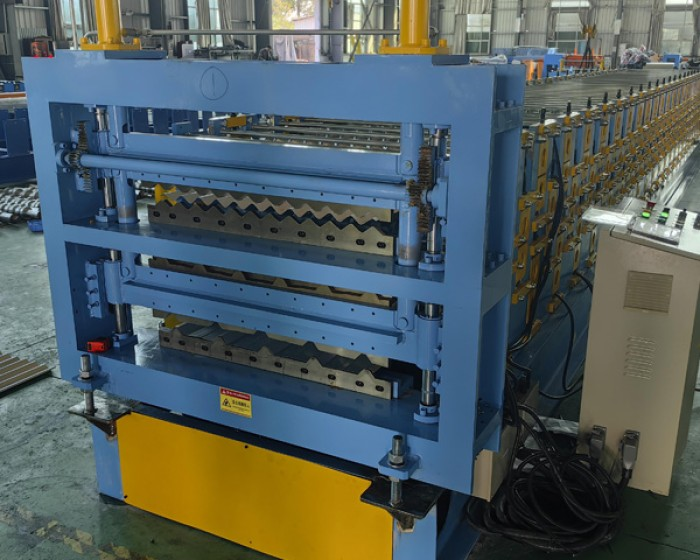
Prefabricated steel building solutions are transforming the construction industry by offering faster project completion, improved quality, and greater cost efficiency. As demand for commercial, industrial, and residential buildings continues to increase, manufacturers are adopting advanced production technologies to meet modern construction requirements. Precision-engineered steel components allow projects to be completed more efficiently while maintaining consistent structural performance. By working with experienced roll forming machine suppliers and investing in a roofing sheet roll forming machine, manufacturers can produce reliable building materials that support the future of prefabricated construction.
Why Prefabricated Steel Buildings Are Growing
Prefabrication allows steel components to be manufactured in controlled production environments before being transported to construction sites for assembly. This process improves manufacturing accuracy while reducing on-site labor and construction delays.
As the construction industry seeks more efficient building methods, prefabricated steel solutions continue to gain popularity across global markets.
How Prefabricated Steel Building Solutions Support the Future
Faster Project Completion
Manufacturing steel components before site installation significantly shortens construction schedules. Faster assembly allows projects to be completed more efficiently.
Improved Manufacturing Accuracy
Modern production equipment creates steel components with precise dimensions and consistent quality. Accurate parts simplify installation and improve overall building performance.
Reduced Material Waste
Advanced manufacturing systems maximize raw material utilization, helping reduce production scrap and lower manufacturing costs while supporting sustainable construction.
Lower Construction Costs
Shorter installation times, efficient production processes, and reduced labor requirements help decrease the total cost of construction projects.
Flexible Building Design
Prefabricated steel systems can be adapted for different building sizes and layouts, making them suitable for a wide variety of commercial and industrial applications.
Applications of Prefabricated Steel Building Solutions
Prefabricated steel building systems are widely used for warehouses, factories, commercial buildings, office complexes, logistics centers, agricultural facilities, educational buildings, retail centers, modular construction projects, and industrial plants. Their versatility makes them ideal for modern construction needs.
Benefits of Prefabricated Steel Construction
- Faster construction schedules
- Improved manufacturing accuracy
- Consistent product quality
- Reduced material waste
- Lower construction costs
- Flexible building designs
- Reliable long-term performance
Choosing the Right Manufacturing Equipment
Manufacturers should invest in equipment that offers advanced automation, precision engineering, durable construction, and dependable technical support. Reliable machinery helps produce high-quality steel components while improving production efficiency and long-term operational performance.
Modern production systems also provide flexibility for manufacturing different structural profiles to meet evolving market demands.
Conclusion
Prefabricated steel building solutions represent the future of modern construction by improving manufacturing efficiency, reducing project timelines, minimizing waste, and lowering overall construction costs. Businesses that adopt advanced production technology are well positioned to meet increasing demand for fast, reliable, and high-quality building systems.
By partnering with trusted roll forming machine suppliers and investing in a roofing sheet roll forming machine, manufacturers can strengthen production capabilities, improve operational efficiency, and support the continued growth of prefabricated steel construction worldwide.